Biocracked
←

#urolithin d

1 article
Approach 4, conceptual metaphor, in palette D, bold color field.

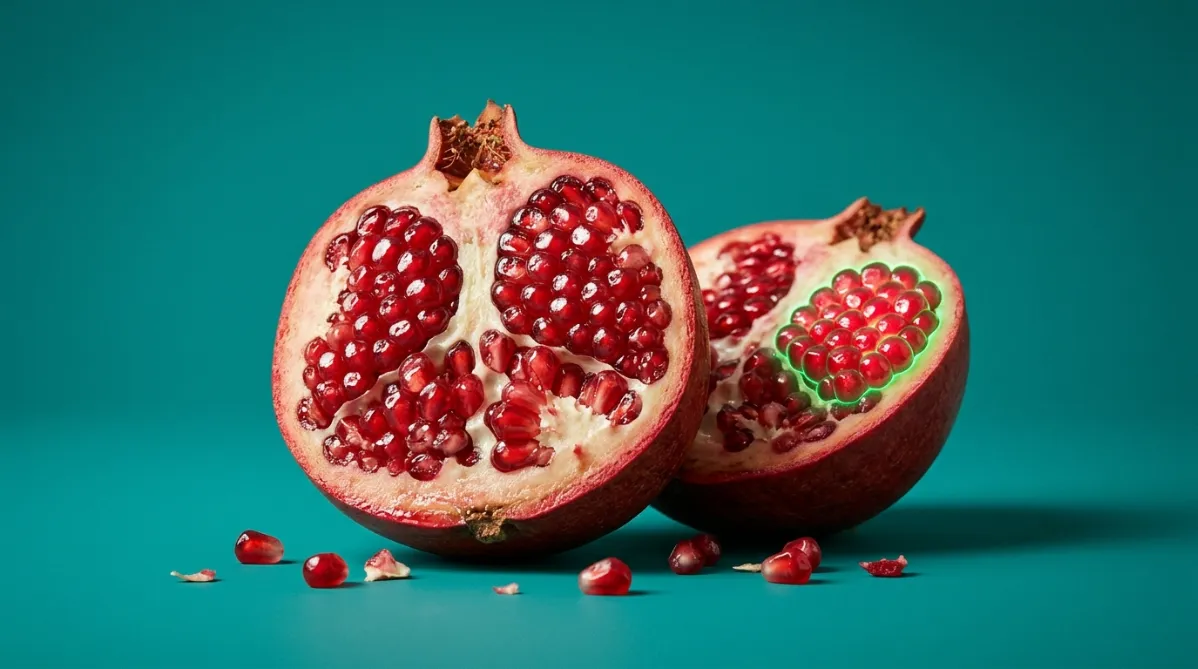
A single pomegranate, split open, sits at the center of a saturated teal backdrop. It is photographed from a slightly high three-quarter angle with a macro lens. One half is pulled slightly forward and the other stays behind it, which hints at two close siblings. The ruby arils are glossy and densely packed. In the smaller half, a few arils glow with a subtle electric green rim light, as if one has been singled out. Pomegranate is a natural source of the precursors that gut bacteria convert into urolithins. Soft, large-source studio light comes from the upper left. It casts crisp, clean shadows on a seamless teal surface and gives the red fruit sharp specular highlights. A few arils are scattered nearby. The mood is curious, vivid and quietly scientific, with a strong red-against-teal contrast and no text.
longevity

Urolithin D versus A: Het onbekende broertje dat het geheugen van muizen beschermde

BY NOVA CHEN ·

Urolithin A krijgt alle aandacht, maar zijn minder bekende broertje, urolithin D, heeft recent hersenbeschermende effecten laten zien bij verouderende muizen. In een D‑galactose‑geïnduceerd verouderingsmodel verbeterde orale toediening van urolithin D de geheugenprestaties en verminderde hippocampale schade, via AMPK‑, PGC‑1α‑ en SIRT3‑signalering en mitofagie‑markers. Celexperimenten toonden aan dat blokkering van AMPK of PGC‑1α het voordeel wist te wissen. Het betreft echter een chemisch geïnduceerd muismodel plus celwerk, zonder menselijke data, en de studie vergelijkt urolithin D niet met urolithin A. Hier lees je wat dit betekent, waar urolithinen vandaan komen en wat je (en wat je beter kunt laten) in de tussentijd kunt doen.

This page is available in